Asad Islam
Chief Financial Officer
A finance-led perspective on energy investment, lifecycle value and the operating assumptions behind technical design.
Pakistan’s commercial and infrastructure energy landscape is creating an important opportunity to combine solar generation, battery storage and intelligent controls into well-engineered systems. In August 2026, the most useful investment question is not simply how much solar or storage can be installed. It is which combination delivers the required energy service, under the site’s actual load profile, for a lifecycle cost that remains understandable and measurable.
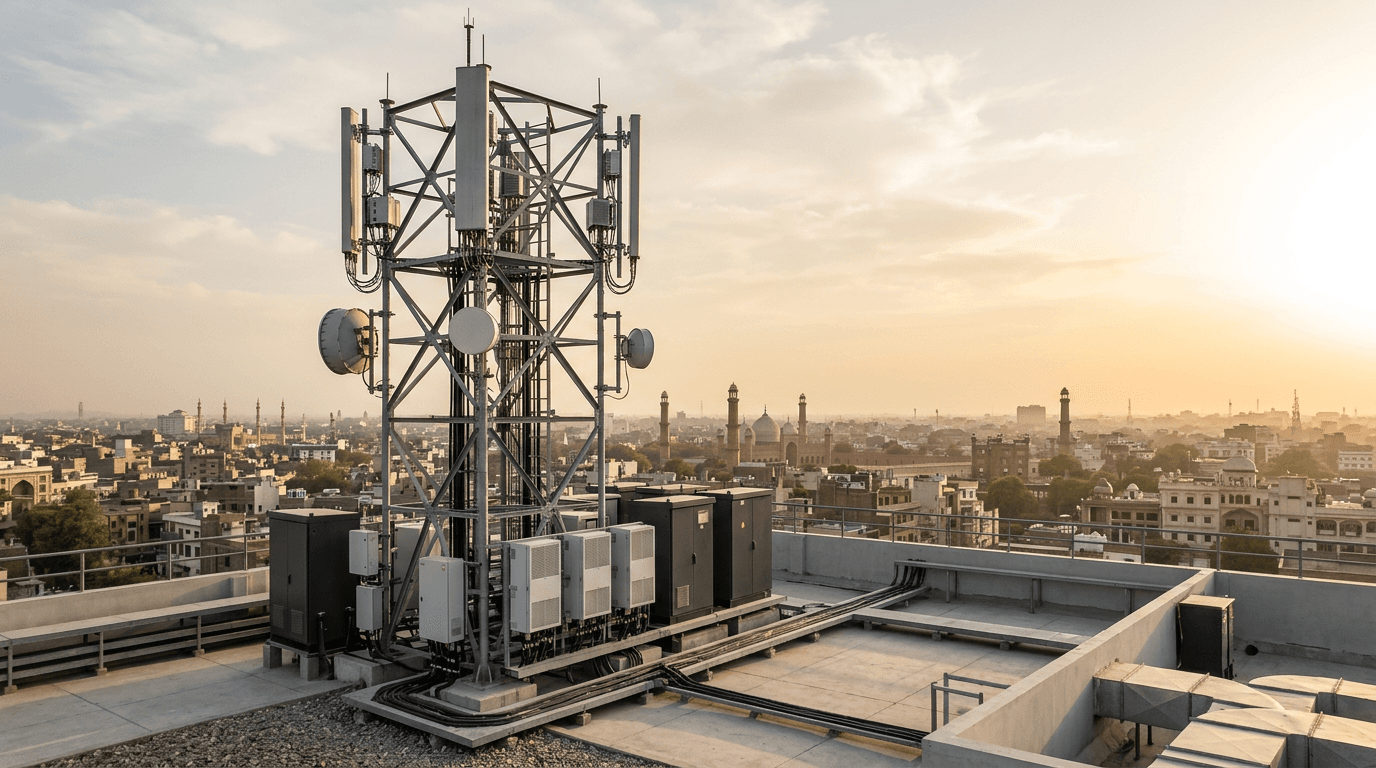
This is where engineering and finance must work together. A rooftop in Lahore, a production facility near Multan, a telecom installation in Sindh and a northern service location have different demand patterns, environmental conditions and operating priorities. The investment case becomes stronger when those differences are visible in the assumptions. Solar capacity, usable battery energy, power-conversion capability and dispatch policy should be chosen as parts of one operating system rather than as independent purchases.
Begin with measured load, not equipment capacity
Record a representative interval load profile before designing the system. A monthly bill describes total consumption but does not reveal when energy is used, how peaks develop or which loads must continue during a planned source transition. Separate essential loads from flexible loads and record their operating windows. Motors, cooling equipment, IT systems and process loads can have different starting and continuity requirements. For infrastructure sites, include transmission, auxiliary equipment and environmental control, not only the principal device.
Pakistan’s seasonal pattern makes the measurement period important. Cooling demand, working hours and production schedules can change the relationship between solar output and consumption. Use the available measurements to build representative operating days and identify what additional seasonal information is required. Document the difference between measured data and assumed data. This allows the investment model to improve as evidence accumulates, and prevents a precise-looking spreadsheet from concealing uncertain inputs.
- Measure interval demand, energy consumption and power quality at the relevant electrical boundary.
- Identify essential loads, controllable loads and starting-current requirements.
- Document seasonal operating patterns and the assumptions used where data is incomplete.
- Define the energy-service objective before choosing solar, inverter or battery capacity.
Evaluate solar through usable production and self-consumption
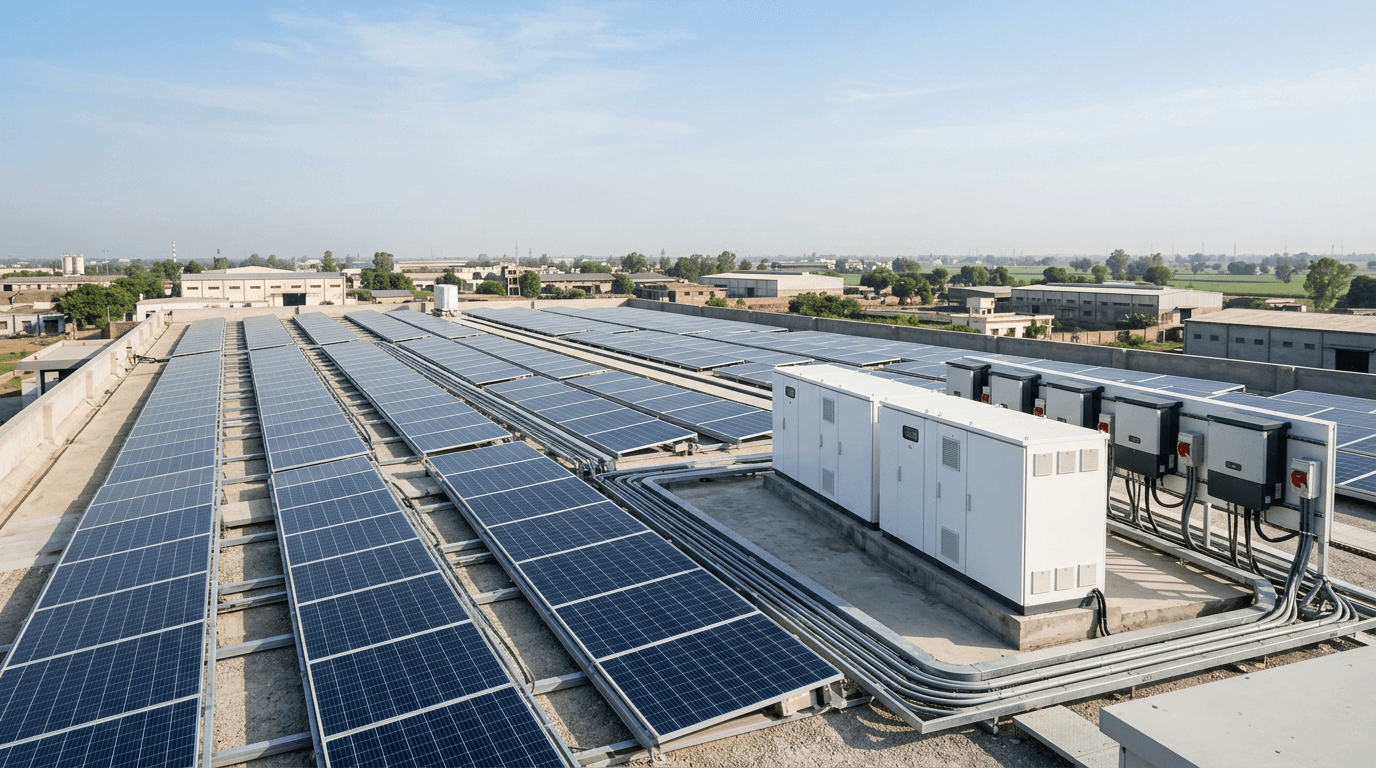
A photovoltaic system’s value depends on the energy it produces when that energy can be used or lawfully exported. Assess orientation, shading, temperature, soiling, cable losses and inverter behaviour. Nameplate module capacity is an input to the model, not a forecast of delivered energy. Compare the expected generation profile with the site’s demand profile and identify the portion consumed directly, the portion available to charge storage and any portion that may need to be curtailed.
Use the applicable tariff and interconnection terms verified at the time of investment. Do not assume that an export unit has the same economic value as a self-consumed unit, or that an arrangement at one site applies automatically to another. For commercial rooftops in Pakistan, structural assessment, safe access, drainage and maintenance planning belong in the project scope. A system that can be inspected and cleaned appropriately is easier to operate against its original performance assumptions.
Separate battery energy, battery power and operating reserve
Battery energy capacity determines how much usable energy is available. Battery and inverter power ratings determine how quickly that energy can be delivered. These must be checked separately. A system may have ample stored energy but insufficient power capability for a particular load step. Usable energy also depends on state-of-charge limits, conversion losses, temperature and the capacity expected near the end of the design life. State each of these assumptions explicitly.
Consider an illustrative essential load averaging 20 kW that needs four hours of support. The load needs 80 kWh of delivered energy. If the planning assumptions are a 90 percent discharge window, 95 percent discharge-path efficiency and 80 percent retained capacity at the design horizon, the corresponding nominal storage requirement is about 117 kWh before any additional operating reserve. This is an educational example, not a recommendation or performance promise. Real sizing requires the actual load profile, manufacturer limits, temperature conditions and applicable safety assessment.
Make dispatch policy part of the investment decision
Dispatch determines when the battery charges, when it supplies a load and how much energy remains available for the priority service. A continuity-oriented system may hold a reserve, while a system designed for energy shifting may use more of its available capacity each day. These objectives can coexist, but they compete for the same stored energy. The controller must implement a documented priority order rather than assuming every benefit can be achieved simultaneously.
For a hybrid site, coordinate solar, grid supply, storage and generation as an electrical system. Identify who establishes voltage and frequency in islanded operation, how sources are synchronized, which loads are shed if necessary and how normal operation is restored. Anti-islanding requirements, protection settings and source-change procedures must be checked by qualified engineers. A dispatch strategy is valuable when it is technically feasible, safely commissioned and understandable to the people responsible for operating it.
Build a lifecycle model that avoids double-counting benefits
The financial case should compare credible alternatives that deliver the same service. Include installed equipment, electrical integration, engineering, commissioning, maintenance, monitoring and the cost of future replacement where relevant. For storage, account for calendar aging as well as cycling, and distinguish an operating-life assumption from a warranty condition. Imported equipment, local installation expenditure and recurring service costs may have different currency exposures, which should remain visible in the model.
Assess direct self-consumption, energy shifting and continuity value without counting the same stored energy twice. Charging from solar has an opportunity cost if that energy could have been used directly or exported under the applicable agreement. Battery throughput has a lifecycle consequence. Model the timing of costs and benefits, evaluate a suitable discount rate, and compare a base case with transparent sensitivity cases. A simple payback figure can be a useful summary, but it should not replace a cash-flow analysis.
- Use verified site tariffs and interconnection terms, with their effective dates recorded.
- Separate direct solar use, storage-shifted energy and retained continuity reserve.
- Include replacement, maintenance and integration costs over the selected evaluation horizon.
- Test sensitivity to load change, solar yield, storage degradation and currency assumptions.
- Report scenario results as estimates, not as guaranteed savings or universal payback periods.
Treat safe integration and commissioning as core assets
Storage selection should be accompanied by a site-specific assessment of installation conditions, access, protection, ventilation and emergency arrangements. Review the evidence for the battery system and its control functions against the standards relevant to the application. Even where a battery chemistry has useful safety characteristics, system-level protection and installation discipline remain essential. Cabinet spacing, environmental protection, thermal management and emergency isolation should be resolved before procurement is finalized.
Commissioning should verify wiring, polarity, protection coordination, operating limits, metering accuracy and communication with the controller. Test the relevant source transitions and confirm that alarm information reaches the responsible team. Establish a baseline for usable capacity and system efficiency under defined conditions. The handover package should contain drawings, settings, inspection records, emergency procedures and the maintenance plan. These deliverables protect the investment by making its operating assumptions verifiable.
Adapt the operating plan to Pakistan’s site conditions
Environmental conditions influence both production and maintenance. Inland installations need a practical approach to dust and high ambient temperature. Coastal equipment deserves suitable corrosion protection. Northern locations may require low-temperature operating provisions and an access plan that reflects seasonal travel. Local service capability, availability of appropriate spares and clarity of warranty support should be evaluated alongside technical specifications.
Create a monthly operating review that compares measured generation, essential-load demand, battery throughput and reserve compliance with the design model. Where performance differs, examine the operating conditions before drawing conclusions. A change in working hours, added equipment or a revised reserve setting can alter the result without implying that the original technology choice was unsuitable. The operating review closes the loop between design, investment and everyday energy use.
An investment roadmap from August 2026 into 2027
A practical roadmap starts with metering and an agreed service objective. The second stage develops comparable designs, a dispatch strategy and a lifecycle model. The third stage validates a representative installation with defined acceptance tests. The fourth stage uses measured evidence to refine the design before wider deployment. This sequence is especially useful where a portfolio spans several cities or different types of infrastructure, because it separates repeatable engineering from site-specific assumptions.
Pakistan’s energy transition offers room for thoughtful, technically grounded investment. Solar, storage and intelligent control are most useful when selected with a clear understanding of the load and operated with a clear understanding of the service. The finance function can add value by making assumptions transparent and comparing complete lifecycle outcomes. The engineering function adds value by proving that those outcomes are physically achievable. Together, they turn energy capacity into dependable energy value.
Sources & Further Reading
Policy context and technical references support this educational perspective. Site-specific designs and investment decisions require current requirements and qualified professional review.
- National Electric Power Regulatory Authority
Primary source for applicable electricity regulations, tariff determinations and interconnection requirements; verify the current site-specific terms.
- IEC standards catalogue
Reference for relevant photovoltaic, battery and electrical energy storage standards, including IEC 62619 and the IEC 62933 series where applicable.
- Global Solar Atlas
Resource-screening reference; replace screening estimates with a site-specific engineering study before an investment decision.